
Post-Facial Glow: 5 Crucial Things to Do After Your Treatment
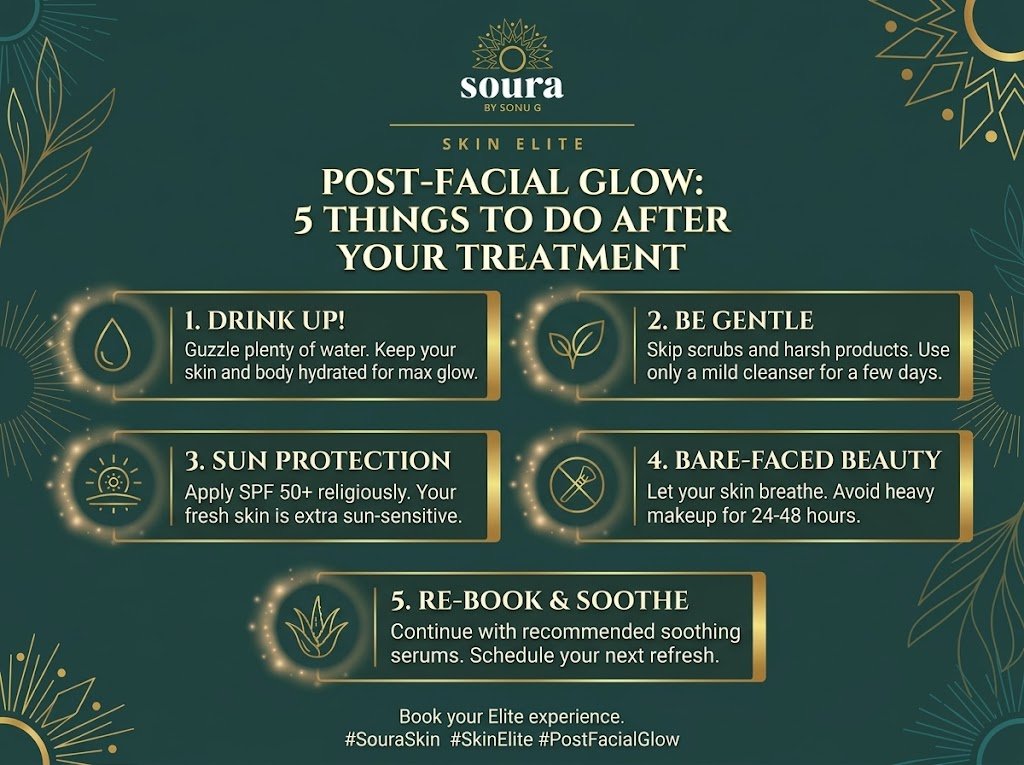
The post-facial radiance after stepping out of the treatment room is unmatched, but maintaining that glass-skin finish depends almost entirely on your post-treatment care. A professional facial deeply cleanses, exfoliates, and extracts impurities, leaving your skin barrier renewed, receptive, and temporarily vulnerable.
Proper facial aftercare ensures long-lasting results, prevents unexpected irritation, and maximizes your skincare investment. Here is the ultimate esthetician-approved guide to caring for your skin after a treatment.
| Step | Action | Why It Matters |
|---|---|---|
| 1. Hydrate | Drink water & use humectants | Restores inner moisture and extends plumpness |
| 2. Cleanse Gently | Skip acids and mechanical scrubs | Protects the sensitized skin barrier |
| 3. Block UV Rays | Apply SPF 50+ broad-spectrum sunscreen | Guards against rapid hyperpigmentation |
| 4. Skip Makeup | Go bare-faced for 24–48 hours | Keeps freshly unclogged pores clear |
| 5. Calm & Maintain | Apply soothing serums & plan touch-ups | Reduces redness and preserves collagen turnover |
1. Flood Your Skin with Hydration
Drink plenty of fresh water immediately following your appointment to rehydrate internal tissue and assist your lymphatic system in eliminating residual toxins. Topically, lock in moisture using gentle, non-comedogenic formulas containing hyaluronic acid, ceramides, or glycerin. Plump, hydrated skin prolongs that coveted post-treatment dewiness.
2. Treat Your Skin Barrier with Care
Put away your physical scrubs, Clarisonic brushes, retinol, and active AHA/BHA chemical exfoliants for at least 72 hours. Because your esthetician has already performed a medical-grade or clinical exfoliation, further sloughing will strip essential lipids, trigger redness, or disrupt your moisture barrier. Switch to an ultra-mild, sulfate-free cleanser and pat your skin dry with a clean towel.
3. Apply Broad-Spectrum SPF 50+
Freshly exfoliated skin cells are significantly more susceptible to UV-induced inflammation, photosensitivity, and hyperpigmentation. Apply a generous layer of broad-spectrum SPF 50+ sunscreen before stepping outside, even on overcast days. Mineral sunscreens containing zinc oxide or titanium dioxide are particularly beneficial post-facial due to their natural anti-inflammatory and cooling properties.
4. Skip Heavy Makeup for 24 to 48 Hours
Your pores are open, clean, and actively absorbing topical nutrients immediately after a facial. Applying liquid foundation, heavy concealers, or powder traps bacteria, irritates open hair follicles, and clogs pores, reversing the benefits of your extraction. Let your skin breathe naturally for 24 to 48 hours to heal and recalibrate.
5. Soothe Inflammation and Maintain Your Routine
Support tissue repair with barrier-repairing active ingredients like centella asiatica, panthenol (vitamin B5), and aloe vera. Avoid hot environments like saunas, steam rooms, and intense cardio sessions for 48 hours to prevent sweat-induced stinging and capillary dilation. To maintain cellular renewal, consult your specialist to schedule your next maintenance session every 4 to 6 weeks.